How to Choose the Best Microscope for Thick Brain 3D Imaging?
Wiki Article
For 3D reconstruction of thick (mm-scale) and whole-brain tissues, light-sheet fluorescence microscopy (LSFM/SPIM) is the undisputed gold standard. It outperforms confocal and two-photon systems in depth, speed, and sample preservation for large-volume neural imaging. Below is a concise breakdown of top technologies, their strengths, and ideal use cases.
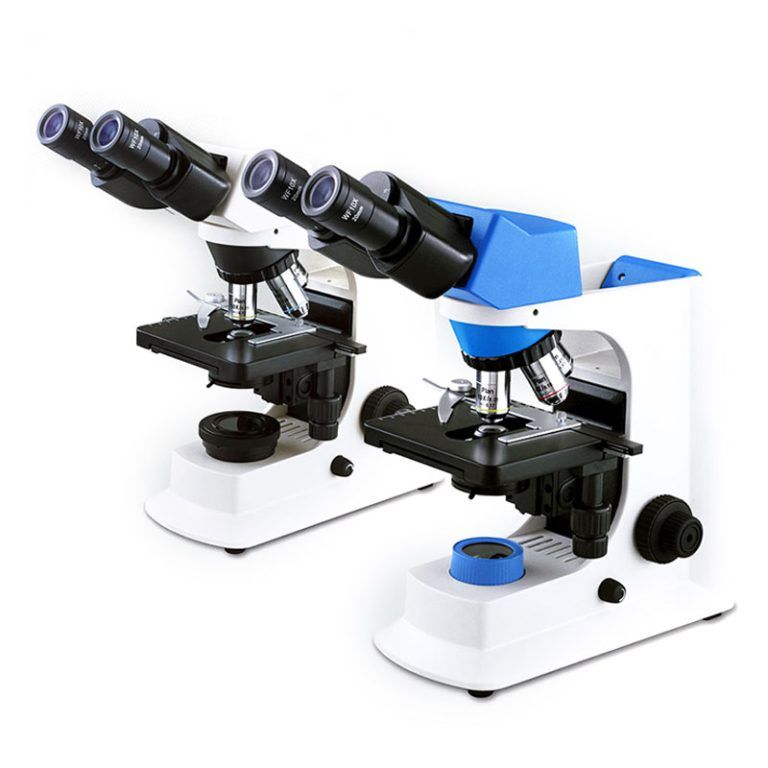
- Finite and infinity optical system Teaching level instrument, 40X~1000X magnification A unique aspheric illumination system provides bright and comfortable lighting Original integrated stand for excellent stability
Scenario | Best Microscope |
Cleared the whole mouse brain (mm-scale) | Light-Sheet (SPIM/LSFM) |
Live, in vivo deep-brain imaging | Two-Photon |
Thin slices (<200 μm), high resolution | Confocal |
Large human brain samples | Theta Light-Sheet |
Nanoscale ultrastructure | FIB-SEM |
Light-Sheet Microscopy (LSFM/SPIM) — Best Overall
Core Principle: Illuminates only the focal plane with a thin light sheet; detects entire planes simultaneously.
Key Advantages for Thick Brain:
- Unmatched depth: Up to 1–10 mm (ideal for cleared whole mouse brains)
- Ultra-fast: Minutes to hours for whole-brain 3D volumes (vs. days for confocal)
- Minimal photobleaching/phototoxicity: Only focal plane excited
- High SNR: No out-of-focus background
- Perfect for cleared tissues (CLARITY, uDISCO, SWITCH)
Best For: Whole-brain connectomics, large-volume 3D reconstruction, fast imaging of cleared samples.
Top Systems: Bruker Luxendo, LaVision BioTec Ultramicroscope, ZEISS Lightsheet Z.1.
Two-Photon Microscopy — Best for In Vivo/Uncleared Tissue
Core Principle: Non-linear IR excitation confined to the focal spot.
Key Advantages:
- Deep penetration in scattering tissue: Up to ~1 mm (live, uncleared brain)
- Cellular resolution
- In vivo compatibility (minimally invasive)
Limitations: Slow for large volumes; high photobleaching with prolonged scanning.
Best For: In vivo imaging, deep live brain slices, and small 3D volumes.
Confocal Laser Scanning Microscopy (CLSM) — Best for Thin/Moderate Samples
Core Principle: Point scanning + pinhole rejects out-of-focus light.
Key Advantages:
- High resolution (sub-micron)
- Widely available
Limitations:
- Depth capped at ~100–200 μm (thick tissues = severe light loss)
- Slow; high photobleaching
Best For: Thin brain slices (<200 μm), high-resolution subcellular 3D details.
Advanced Variants — Specialized Use Cases
- Theta Light-Sheet (LSTM): Breaks size limits; ideal for large/intact human/mammalian brains.
- Spinning Disk Confocal: Faster than point-scanning; still depth-limited (~200 μm).
- FIB-SEM/Block-Face SEM: Nanoscale resolution; destructive, extremely slow (for small volumes only).